


TheLEADER sat down on Ly Son Island, off the coast of Quang Ngai Province, with Architect Cung Thanh Dat, Managing Director of Baumschlager Eberle Vietnam, to explore the unique design philosophy behind this one-of-a-kind development.
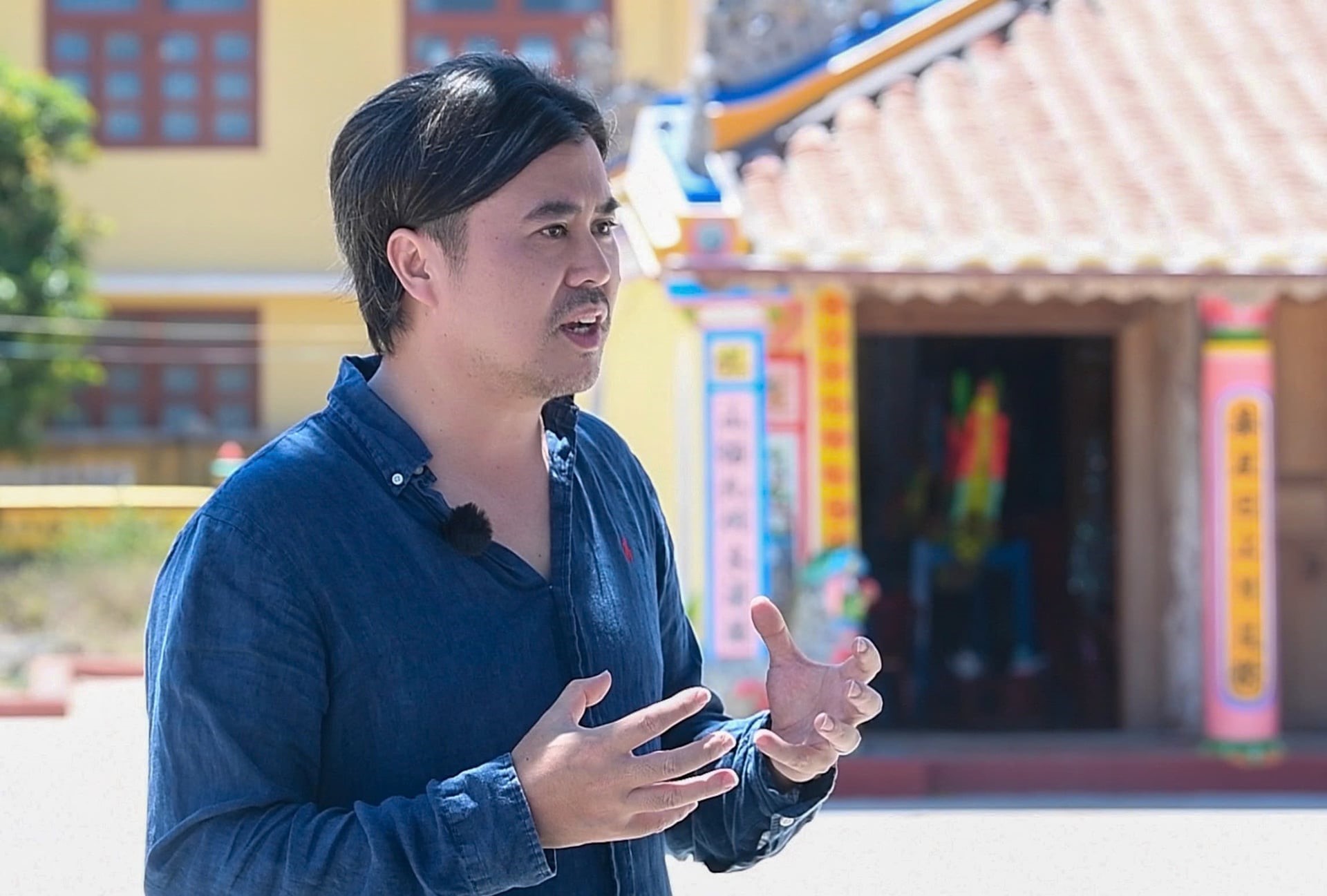
Architect Cung Thanh Dat, Managing Director of Baumschlager Eberle Vietnam. Photo: Hoang Anh.
Where Three Civilizations Converge
TheLEADER: We are standing within the grounds of An Hai Communal House on Ly Son Island - a place that became a major source of inspiration for Baumschlager Eberle Vietnam in designing Crystal Holidays Heritage Ly Son for Everland Group. What makes this centuries-old communal house so special that you chose it as the project's conceptual foundation?
Architect Cung Thanh Dat: The site where we are standing is what remains of An Hai Communal House, one of Ly Son Island's most remarkable historical and architectural landmarks. Built in 1820 during the reign of Emperor Minh Mang, the communal house follows the traditional Tam (三) architectural layout, comprising the main sanctuary flanked by left and right auxiliary halls.
More than a spiritual structure, An Hai Communal House is a powerful historical testament. It bears witness to the pioneering efforts of our ancestors and symbolizes Vietnam's long-standing sovereignty over its maritime territories. It was here that Emperor Minh Mang established the legendary Hoang Sa Flotilla, tasked with safeguarding and managing the country's offshore islands centuries ago.
Architecturally, the communal house represents a unique intersection of Sa Huynh, Cham, and Dai Viet civilizations. Yet what fascinated us most was its human scale.
This island has existed for millions of years under the overwhelming grandeur of nature. When our ancestors chose to place this communal house here, they did so with extraordinary sensitivity to proportion. The building remains modest in scale, harmonizing perfectly with its surroundings rather than dominating the landscape.
TheLEADER: How has Baumschlager Eberle translated this philosophy of human scale and sense of place into Crystal Holidays Heritage Ly Son, especially when a five-star resort is often expected to maximize room inventory and development density?
Architect Cung Thanh Dat: From the very beginning, we treated the spirit of place as our guiding principle.
For us, "place" encompasses both the island's historical narrative and its unique microclimate. As one of the world's leading architectural practices, with headquarters in Switzerland and Germany, Baumschlager Eberle employs advanced environmental simulation technologies capable of accurately analyzing seasonal temperature variations, prevailing wind directions, and local climatic conditions. These analyses allow us to find the optimal balance between architecture, people, and nature.
We deliberately rejected the conventional model of constructing a massive hotel block with hundreds or even thousands of rooms arranged in rigid grids.
Instead, we drew inspiration from the traditional settlement patterns of Ly Son's fishing communities, creating clusters of intimate neighborhoods rather than imposing large monolithic structures.
Spatially, the resort is organized into small compounds consisting of three to eleven residences, carefully positioned to nestle into the natural landscape, much like the island's fishing villages, whose layouts evolved over generations to shield residents from harsh coastal winds and seasonal storms.
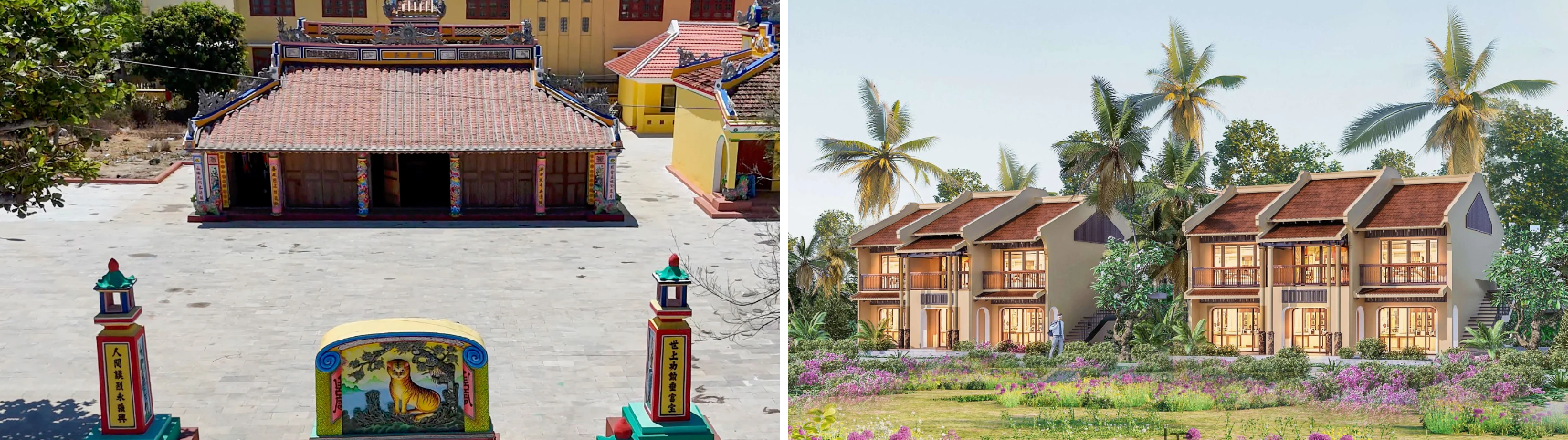
An Hai Communal House on Ly Son Island (left) and the architectural rendering of Crystal Holidays Heritage Ly Son's resort villas. Photos: Hoang Anh and Baumschlager Eberle.
At the architectural level, we distilled the purity of Sa Huynh culture into the design of one-story timber houses and private resort villas, while incorporating the refined ornamental motifs of Cham architecture into the central community pavilion.
Traditional construction techniques and locally inspired materials will be prioritized throughout the project, creating a truly distinctive destination, one that delivers international standards of comfort while preserving the modest scale and intimate character that define Ly Son Island.
Towards Net-Zero Architecture
TheLEADER: Net-zero emissions have become a global priority, with the Vietnamese Government committing to achieving this target by 2050. For an island resort such as Crystal Holidays Heritage Ly Son, how does Baumschlager Eberle approach this ambitious objective?
Architect Cung Thanh Dat: To understand net-zero architecture, we first need to understand the concept of embodied carbon, sometimes referred to as grey energy.
Embodied carbon represents the greenhouse gas emissions generated throughout the lifecycle of construction materials from mining raw resources and steel production to manufacturing, transportation, and construction activities. These emissions significantly contribute to climate change long before a building even begins operation.
At Crystal Holidays Heritage Ly Son, our objective is to minimize embodied carbon as much as possible through a rigorous framework of 18 sustainability criteria, ultimately moving the project toward net-zero emissions.
This roadmap consists of two key phases. The first is achieving Green Building Certification during construction. The second focuses on Green Operations, ensuring the resort performs sustainably throughout its lifecycle.
Three years after the resort begins operations, an independent American auditing organization will conduct a comprehensive energy audit before awarding the project's official certification, based on its actual environmental performance.
Interestingly, if we look back at how our ancestors lived, they were already practicing what we now call net-zero living.
Timber came from sustainably managed forests. Stones and bricks were gathered from rivers. Thatched roofs were made from natural reeds harvested from wetlands. One remarkable example is the traditional rammed earth wall a construction technique that requires no firing process, produces virtually no carbon emissions, and offers excellent thermal insulation.
Today, one of Vietnam's internationally recognized architects is leading research into rammed earth construction with support from the German Government. We are also exploring opportunities to apply this low-carbon construction method to Everland's project.
In fact, our ambition goes even further than achieving net zero.
We are exploring carbon-negative solutions by replacing conventional reinforced concrete structures with engineered timber sourced from sustainably managed fast-growing forests. Trees naturally absorb carbon dioxide as they grow, and when that timber is incorporated into buildings, the carbon remains stored for decades—turning architecture itself into a long-term carbon sink for future generations.
The Formula for Success: Where Spectacular Nature Meets Cultural Heritage
TheLEADER: Having worked alongside Everland Group on several major developments, how do you assess its investment strategy? Some observers believe the Group is taking considerable risks by continuously investing in remote, undeveloped destinations that present significant challenges.
Architect Cung Thanh Dat: If viewed purely from a short-term financial perspective, many would indeed consider this a risky investment strategy.
At Baumschlager Eberle, we are extremely selective when choosing developers to work with. The reason we decided to partner with Dr. Le Dinh Vinh, Chairman of Everland Group, is because we found a shared philosophy centered on sustainable development and community building.
Everland is not acquiring land in already saturated destinations simply to subdivide and sell property. Its investment philosophy has consistently been built upon the harmonious combination of two essential elements: extraordinary natural landscapes and cultural heritage created by people.
Take Siem Reap in Cambodia as an example. Why do millions of international travelers continue to visit year after year? The answer lies in the coexistence of two remarkable assets: Angkor Wat, one of the world's greatest cultural monuments, and the vast ecosystem of Tonlé Sap Lake, an exceptional natural wonder.
Everland is applying precisely this proven formula for sustainable destination development in Vietnam.
Not only on Ly Son Island, where million-year-old volcanic landscapes coexist with centuries-old temples and shrines, Baumschlager Eberle is also designing other resort developments for Everland at Cu Lao Ong Xa in Dak Lak Province and Cam Mountain in An Giang Province.
Each of these locations possesses extraordinary natural settings while being deeply rooted in coral conservation areas or centuries-old cultural trading routes.
That is the vision driving these developments transforming pristine cultural and natural assets into long-term economic opportunities for local communities.
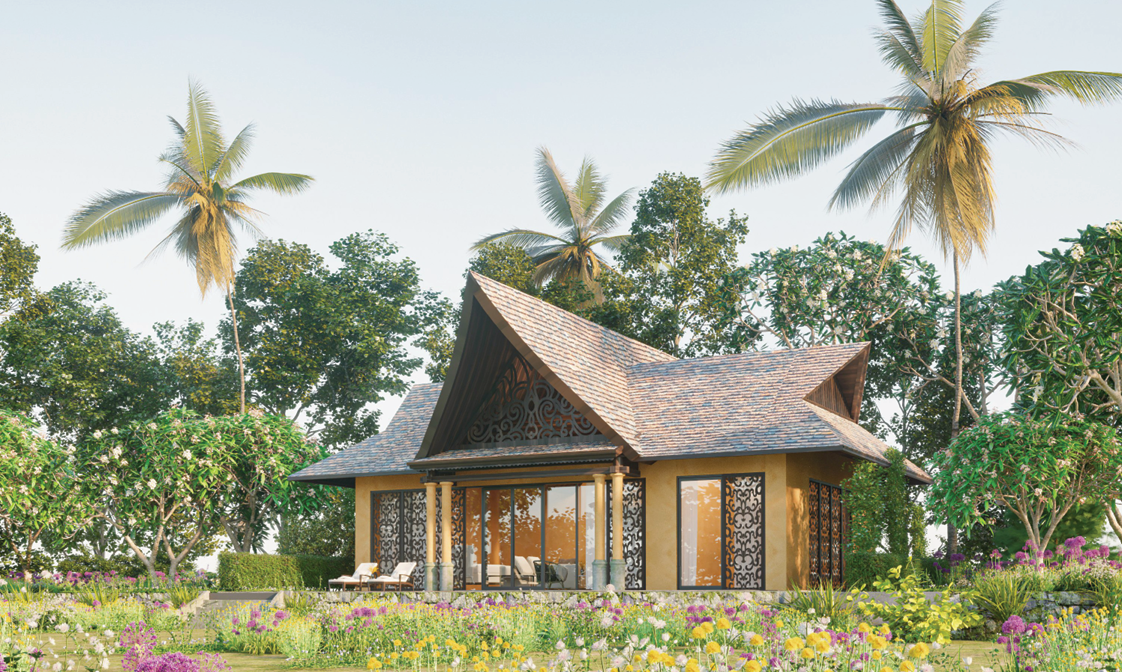
The refined essence of the ancient Sa Huynh culture is thoughtfully interpreted through the project's one-storey timber residences. Photo courtesy of the developer.
Winning the Next Generation
TheLEADER: In Vietnam, luxury developments are often associated with marble finishes, gold-plated details, and European neoclassical architecture. Are you concerned that incorporating such understated Vietnamese cultural elements into Heritage Ly Son might diminish its sense of luxury?
Architect Cung Thanh Dat: For Crystal Holidays Heritage Ly Son, celebrating local cultural identity within an internationally operated luxury resort is not simply one of our objectives, it is our fundamental guiding principle.
Baumschlager Eberle operates 29 offices worldwide, yet the firm appointed a Vietnamese architect to lead its Vietnam office because I possess a deep understanding of Vietnamese culture and people. We would never take a design conceived in Switzerland or Germany and replicate it here without adaptation. I believe it is time we redefine what luxury truly means.
In many Asian cultures, luxury is often judged by material expression polished marble, lavish finishes, grand architectural gestures. But in Europe, and increasingly throughout the international luxury hospitality industry, true luxury is defined by two essential qualities: privacy and meaningful moments.
Rather than building thousands of rooms to accommodate mass tourism, we intentionally maintain a very limited number of guestrooms based on human scale, creating an environment of genuine privacy.
Discerning travelers do not come to Ly Son to admire marble walls. They come to reconnect with nature, restore their wellbeing, and experience something emotionally meaningful. True luxury lies in creating moments that leave a lasting emotional imprint.
Imagine someone who grew up on Ly Son, moved to Hanoi to build a career, and later returns home. Standing once again on the land of their ancestors, reconnecting with family memories that, to me, represents one of life's greatest luxuries. The world's leading hotel brands understand and value precisely these kinds of experiences.
TheLEADER: We understand that another project designed by Baumschlager Eberle in Hanoi recently received prestigious international awards based on this very philosophy. Could you share that story?
Architect Cung Thanh Dat: Certainly!
Dusit Tu Hoa Palace, which we designed near West Lake and the historic Kim Lien Pagoda in Hanoi, was recently honored with the World's Best Small-Scale Hospitality Architecture award at the LIV Hospitality Design Awards, one of the most prestigious international awards dedicated to hospitality design. The project was also recognized as Asia's Best Small-Scale Hospitality Architecture.
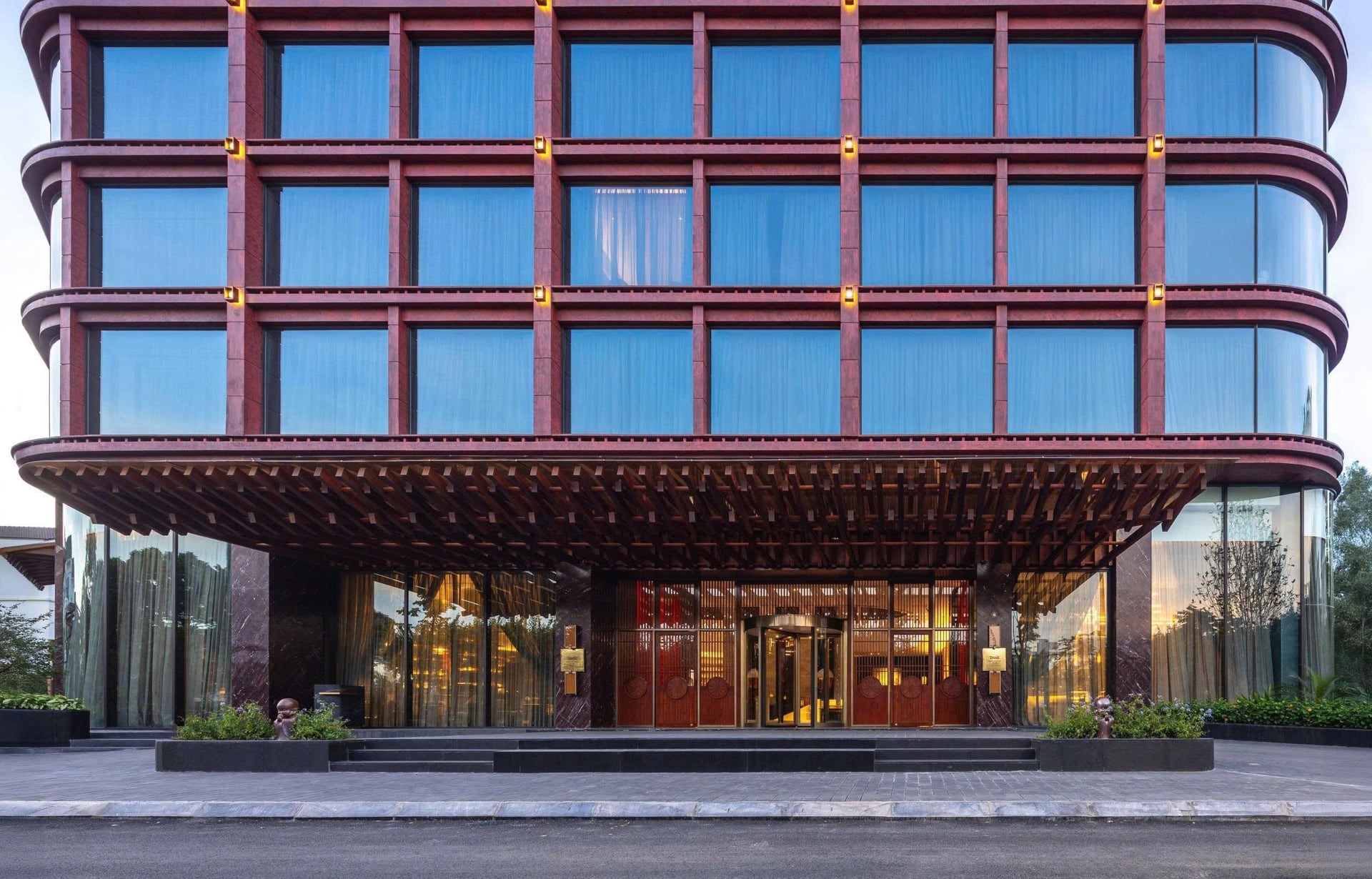
Dusit Tu Hoa Palace was recently named the World's Best Small-Scale Hospitality Architecture at the LIV Hospitality Design Awards. Photo: Baumschlager Eberle.
Its success came from our commitment to embedding contemporary Vietnamese living within a broader cultural narrative. Situated beside Kim Lien Pagoda, a thousand-year-old historical landmark, the hotel draws inspiration from the pagoda's architectural gateways and the story of Princess Tu Hoa, who left the royal court to teach local communities silk cultivation.
We translated that narrative into the hotel's interior design, incorporating more than 200 artworks illustrating her life and legacy. The project does not feel nostalgic or outdated.
On the contrary, it has become an iconic destination for younger generations while receiving international recognition. When Vietnamese identity is interpreted with authenticity, creativity, and genuine cultural pride, it can confidently stand on the world's highest stage.
TheLEADER: Traditional culture is often perceived as something old-fashioned, appealing primarily to older generations. Yet the future of the hospitality industry belongs to Generation Z, who seek novelty, creativity, and contemporary experiences. How can these seemingly opposing expectations be reconciled?
Architect Cung Thanh Dat: That's an excellent question and one I frequently discuss with developers. Let me illustrate with an analogy from painting.
Traditionally, many Asian audiences have preferred realism: flowers should look exactly like flowers, people exactly like people. European art, meanwhile, has long embraced abstraction. Our architectural approach lies somewhere in between. Rather than reproducing every architectural detail of An Hai Communal House within Crystal Holidays Heritage Ly Son, we extract its spirit, its cultural essence, and reinterpret it through a contemporary architectural language.
Today, at leading international hospitality forums, there is broad consensus that Generation Z will become the industry's dominant customer segment over the coming decades. This generation is less concerned with luxury in its traditional sense fine dining or premium beverages and far more interested in meaningful experiences.
The most unforgettable experiences are those that create authentic connections with local culture. That is why, beyond architecture, we are introducing a landscape art program at Crystal Holidays Heritage Ly Son.
Together with Everland Group, we envision the resort becoming a creative platform for emerging artists hosting artist residencies, design workshops, and creative festivals where artists can draw inspiration directly from Ly Son before leaving behind permanent works integrated into the resort landscape.
In architecture and landscape design, we call this approach subtle intervention. If left entirely untouched, the environment risks appearing abandoned. If altered too aggressively, it becomes artificial and loses its authenticity.
Our goal is to intervene the way nature does like a pristine forest where delicate flowers bloom naturally among ancient trees. Vietnam's younger generation has grown up with strong educational foundations, refined aesthetic awareness, and early exposure to music, art, and global culture. They possess both the knowledge and the sensitivity to appreciate thoughtfully curated cultural experiences. For that reason, I firmly believe Crystal Holidays Heritage Ly Son will become far more than a real estate development.
It will stand as a cultural landmark one that celebrates Vietnamese identity while inspiring generations to come.
TheLEADER: Thank you very much for such an insightful and inspiring conversation.


